


Freedom has a cost.
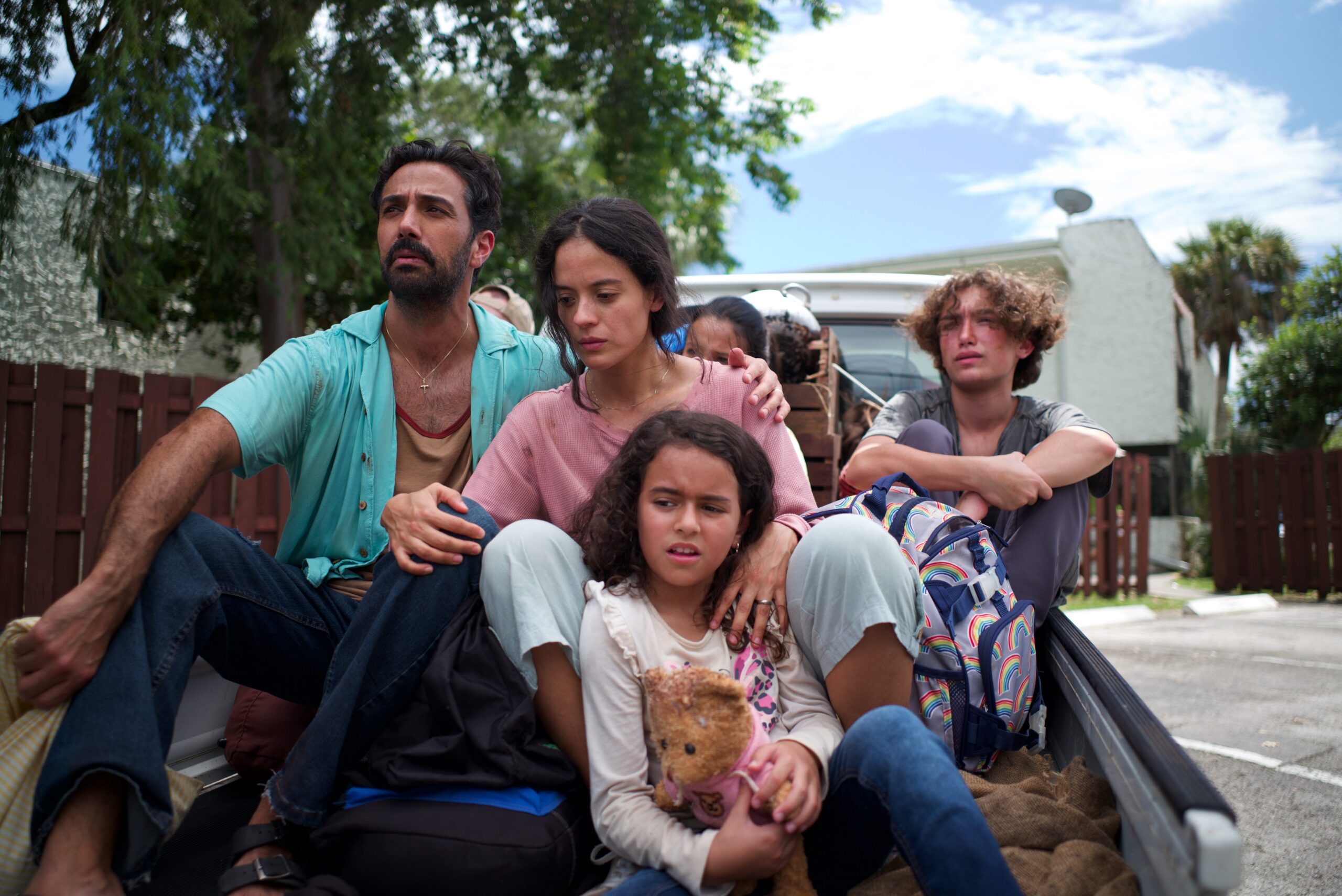
Wake tells the story of Sammy, a Cuban immigrant haunted by the consequences of his decision to lead his family to freedom on a risky journey from Cuba to Miami.

The Film
Watch WAKE
Production Stills
Behind the Story
In His Words
Director’s Statement

My parents escaped from Iran to America, harboring dreams of a better future not just for themselves but also for my younger brother and me. Their sacrifices, love, and unyielding spirit pulse through every page of “WAKE.”
Avi YouabianDirector

Cast
-
Julio Gabay made his feature debut alongside Ana de Armas, Wagner Moura and Edgar Ramírez in Olivier Assayas’s Wasp Network (2019), a Netflix top 10 film. He went on to play El Saguaro opposite Brad Pitt in David Leitch’s Bullet Train (2022).
In 2022 Julio began developing the story that became his screenplay for WAKE, in which he also stars as Sammy. Surrounded by family and friends with personal ties to the Cuban struggle, he drew on themes of freedom, self-sacrifice, love and regret — all part of the immigrant experience. The film also carries his perspective as an American born and raised with a Latino heart: a love letter to immigrants, written by a child of immigrants.
Crew
-
Avi Youabian is an award-winning Iranian director who has worked on some of the top-performing shows on broadcast, cable and streaming. In 2018 he earned an Emmy nomination for directing and producing The Walking Dead: Red Machete.
Before directing, Avi worked as an editor in film and television. His sense of story and character led to high-profile projects, including several pilots for Greg Berlanti and feature films for Halle Berry and Jon M. Chu. He lives in Los Angeles with his wife and three children and is a passionate photographer.
-
Julio Gabay made his feature debut alongside Ana de Armas, Wagner Moura and Edgar Ramírez in Olivier Assayas’s Wasp Network (2019), a Netflix top 10 film. He went on to play El Saguaro opposite Brad Pitt in David Leitch’s Bullet Train (2022).
In 2022 Julio began developing the story that became his screenplay for WAKE, in which he also stars as Sammy. Surrounded by family and friends with personal ties to the Cuban struggle, he drew on themes of freedom, self-sacrifice, love and regret — all part of the immigrant experience. The film also carries his perspective as an American born and raised with a Latino heart: a love letter to immigrants, written by a child of immigrants.
-
Bochen Zhang is a Los Angeles–based producer who has worked in film and television since 2007. Her credits include the Emmy-nominated series The Walking Dead: Red Machete and Netflix’s Ultimate Beastmaster.
She co-produced Wonderland, a short film that won second place at HBO’s APA Visionary Awards, and line produced the award-winning feature End of Summer, which premiered nationwide in China in 2017. Her work has aired on AMC, HBO, Disney Channel, Lifetime and Bounce Network.
-
Rebecca Teresia is a Finnish-born filmmaker known for producing the award-winning Korean-American feature Junho, along with features, documentaries and the TV series Fashion Sense on Spectrum OC16. Her work spans print, music, narrative, commercial and corporate production.
Drawn to stories that raise awareness of important issues, she found special meaning in WAKE.
-
Todd Ulman started in show business getting coffee and running errands on a little TV show called Friends. He went on to produce several films and TV shows, and for more than a decade has run Mad Old Nut, a Hollywood post-production facility serving major studios such as Warner Bros. on shows including All American and Found.
Todd also builds technology for creative teams, including ABT and the Mad Old Nut Box, tools that let people work seamlessly from anywhere in the world.
-
Andy Ryan Flores is a director of photography whose work spans commercial, fashion and documentary projects around the world, while staying closely connected to his hometown of Miami. His collaborations include Dickies, Spotify, Meta and Gatorade, featuring Serena Williams.
On WAKE, he brought his signature touch to the film’s visual storytelling.
-
Blair Barnette has designed and art directed major film and television productions in the UK, the USA and across Europe, working with directors such as Lynne Ramsay, Jim Sheridan, Ben Wheatley and Lisa Gunning.
On WAKE, she brought her gift for crafting immersive, awe-inspiring visual worlds.
-
Lexie Garcia is a Tokyo-based writer and art director. Her love of storytelling and her years of travel give her work a rare depth.
WAKE marked her debut as an art director, and the story is close to her heart: her family immigrated from Cuba. With a keen eye for detail, she helped shape an aesthetic that feels authentic and distinctly human.
-
Valerie Hernández Oloffson is a casting director from the Dominican Republic, fluent in Spanish, English, French and Haitian Creole. In 2009 she founded VHO Casting, which became a leading choice for casting in the Dominican Republic on both local and international projects.
With more than 70 credits — including the features NYAD, The Killer, Boca Chica and Arthur the King, and the series Saint X, Are You Afraid of the Dark? and The Best Man: The Final Chapters — she has earned Best Casting Director awards and nominations. She also casts commercials, musical theater and music videos, from lead roles to background artists.
-
Talia Lidia González is a Miami native and an editor with more than a decade of experience. A graduate of the University of Southern California, her credits include DC’s Legends of Tomorrow, 12 Monkeys and The Company You Keep for ABC.
-
Geronimo Mercado is a multidisciplinary artist from Puerto Rico whose Latino upbringing shapes his work across art forms, especially music. He has scored more than 30 films in Spanish and English, including 12 Hours, a winner at the Tribeca Film Festival; Miente, Puerto Rico’s official Oscar submission; 200 Letters, featuring Lin-Manuel Miranda; Ana, starring Andy Garcia; Speed Kills, starring John Travolta; and Driven, starring Jason Sudeikis. His soundtracks are released through Polifacetic Music/Universal Music.
A Berklee College of Music graduate with an MFA in Sound Arts from Columbia University, he is an alumnus of LAFCI and a 2021 Cannes Marché du Film fellow. He divides his time between Puerto Rico, New York and Los Angeles.
The History...
Stories and reporting on the Cuban rafter experience, the risks of the crossing, and the history behind journeys like the one depicted in WAKE.
A Makeshift Raft Speaks to the Risks Cubans Took to Escape Their Homeland
In the mid-1990s, tens of thousands left in boats or handcrafted floats facing treacherous waters in search of a better life
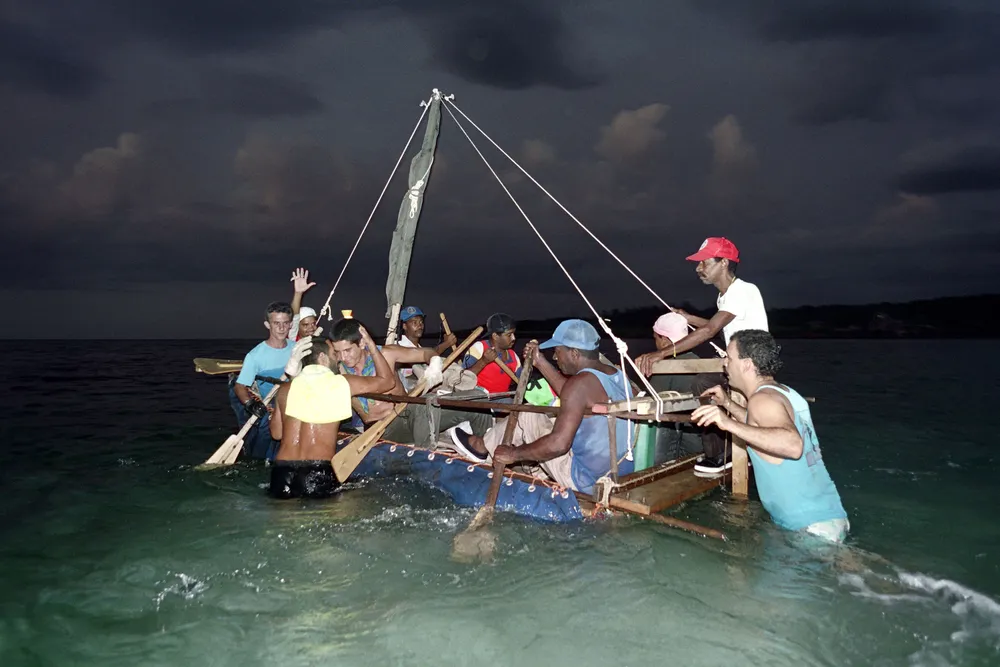
In the summer of 1994, Gustavo Martínez attempted to flee his native Cuba for Miami on the tugboat 13 de Marzo, named after a seminal date in the Cuban Revolution. Martínez was making the dangerous journey with his wife, Yuliana, and their children, 10-year-old Yandy and six-month-old Hellen. He and the 66 other friends and neighbors accompanying his family had spent months meticulously planning the escape.
But several days into the voyage, when the group was approaching open sea, Martínez’s boat was discovered by a small fleet of Cuban government ships tasked with patrolling the waters for fugitives. In the ensuing attack that came to be widely known as the Tugboat Massacre of July 13, his wife and daughter, along with more than 30 others, tragically drowned. Martínez and his son were forced to return to Havana, where they lived for six more years until they won visas in a lottery and were finally able to leave for Miami.
“I remember it like it was yesterday,” says Martínez, now 64. His initial attempt to leave Cuba in the mid-1990s took place on the eve of the Cuban Rafter Exodus, also known as the Balsero Crisis, when nearly 35,000 Cubans hurriedly left their homeland in boats or makeshift rafts to take advantage of the government’s decision to let people leave without hindrance. The exodus was part of an on-going emigration of more than a million Cubans to the U.S. that began with Fidel Castro’s 1959 overthrow of the government.
In the new exhibition “¡Presente! A Latino History of the United States,” opening June 18, in the Molina Family Latino Gallery at the Smithsonian’s National Museum of American History, stories like that of Martínez will be commemorated with the display of a raft, known as a balsa in Spanish.
The show is the first to be organized by the new National Museum of the American Latino and offers a reconsideration of U.S. history through the lens of the Latino experience. An expansive collection of artworks and artifacts—such as prehistoric coins, sacred figurines, engravings, sculptures, pottery, and contemporary arts and crafts—was amassed after curators exhaustively combed the Smithsonian collections and those of prestigious museums and archives around the globe.
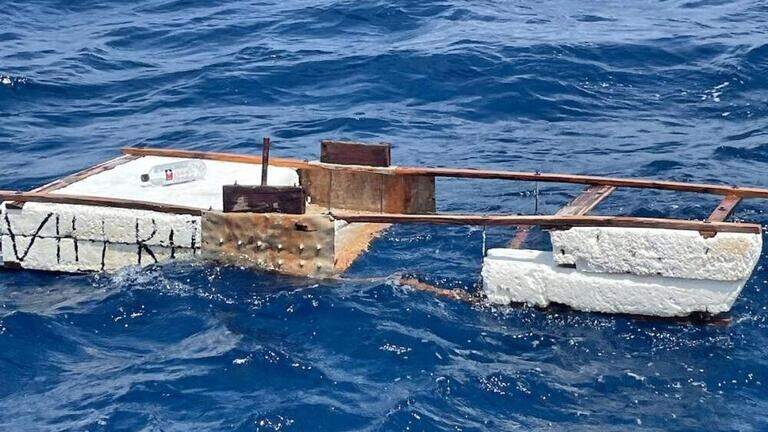
The raft is crafted from Styrofoam and wood, and is coated with tar and cloth coat to safeguard against sharks and protect it from water leaks. It was used by two young Cuban migrants in July of 1992 when they fled across the treacherous 92-mile ocean strait to reach the Florida coast. Pilots working for Brothers to the Rescue, a non-profit organization founded in 1991 by Cuban exiles, spotted the pair and notified the U.S. Coast Guard of their location.
“The raft is a piece of living history,” says Ranald Woodaman, the Latino Museum’s director of exhibitions and public programs. Until January 2013, Cuban criminal law made it illegal for Cubans to leave their country, the first communist state in the Western Hemisphere, or to assist others in fleeing without receiving official government permission. This was part of the strict legal regime imposed by Castro, the leader of Cuba's communist revolution who ruled over the island nation until 2008 and died in 2016 at the age of 90.
The experience of living in Cuba under Castro was fraught. Political freedoms, like the rights to a free press, to join a trade union and to openly disagree with the government, were widely repressed even as its population experienced a systemic reduction in illiteracy, saw the implementation of electricity in rural areas and benefited from the development of a world-renown public health system.
For the U.S. government, Cuba's revolution was a little too close for comfort. Just a year after Castro toppled the military dictator Fulgencio Batista, the U.S. ended all diplomatic relations with Cuba, enacting a harsh embargo; and when the Soviet Union collapsed in the early 1990s, Cuba lost its most important political and economic trade partner. The country could not produce on its own; supplies as fundamental as soap, milk and sugar virtually disappeared from store shelves.
As Cuba’s economy went into freefall, Washington tightened its economic sanctions against Cuba, exacerbating the abject poverty that forced Cubans to illegally flee. Riots broke out in Havana on August 5, 1994, prompting Castro to announce a temporary reprieve of the enforcement of emigration laws. According to The Cuban Rafter Phenomenon: A Unique Sea Exodus, a digital archive published by the University of Miami, 32,385 Cubans "left from all parts of the island."
"Between 1959 and 1994, in defiance of the law, more than 63,000 citizens left Cuba by sea in small groups and reached the United States alive. Thousands more washed up in the Bahamas, the Cayman Islands and other Caribbean shores... At least 16,000 additional rafters did not survive the crossing."
Smithsonian visitors will learn firsthand the ways Cubans used spare tires, pieces of wood, random pieces of rubber and other household supplies to create any kind of boat, vessel or raft that might be able to carry them on the ocean.
Woodaman says the “huge range” in the types of rafts, from their size to the materials used, are demonstrative of the “incredible desperation and incredible ingenuity” of these men and women. Just over six feet long and three feet wide, the tiny vessel on view is lined with a blue plastic shower curtain. It has undergone conservation to stabilize and preserve it.
“I had to leave the only way I could—in my boat—it was all I had,” according to one account at the time. “I had no one in the United States. I didn’t want to leave.”
Woodaman anticipates that the artifact will have an immediate impact on its viewers. “People look at it and think—Would I do this?”
While many viewers, especially children and adolescents, might arrive at the exhibition knowing very little about Cuban-American relations, seeing the tiny makeshift raft might help spark the curiosity to learn more. “It’s legible, it inspires empathy,” Woodaman states.
Martínez agrees. His family’s loss is forever in his heart. “From my point of view, a balsa signifies a life.” But his son, Yandy, is a graduate of the University of Florida and is now married with two daughters.
“I’ve finished my life on a high note, and I have peace in my heart. I’ll never be able to put into words the gratitude I feel.”
Nili Blanck is a writer based in Mexico City.
Source: Smithsonian Magazine. Read the original article
US officials report massive increase of Cuban rafters in Florida waters
More and more Cuban rafts are appearing in U.S. waters due to the political and economic crisis on the communist-run island.

A rustic, polystyrene-built raft washed ashore on a Miami area beach Saturday in the latest evidence of a major increase in illegal seaborne migration from Cuba, according to officials.
There were no passengers on board but signs that the unknown occupants had traveled from Cuba which is in the midst of its worst political and economic crisis in three decades with shortages of basic items and island-wide power cuts.
An empty 50 kg sack of Uruguayan rice lay on the floor of the vessel, with lettering in Spanish saying it from the Cuban state import company, Alimport. There were also discarded sneakers, clothing and large water containers.
The vessel was discovered on a beach in Cape Florida State Park, Key Biscayne, about 7 miles from downtown Miami.
An engine, from a car or truck with a drive shaft connected to a propeller was installed in the center of the narrow 18-foot-long raft made from blocks of polystyrene riveted together with metal screws, wooden planks and industrial glue.
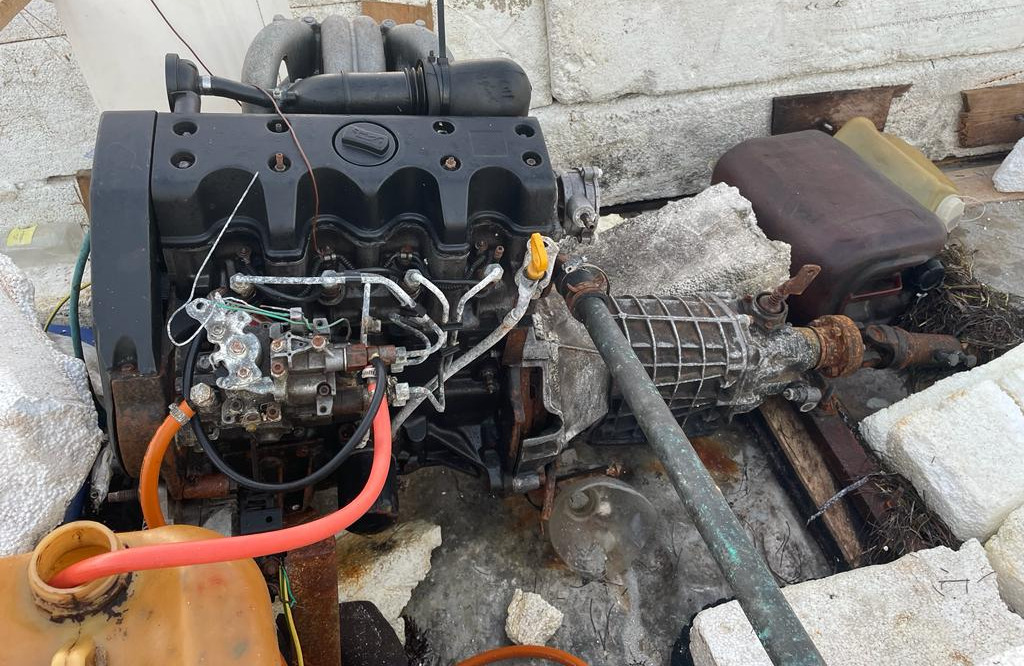
Record numbers of Cubans leaving the island
Historic numbers of Cubans – more than 250,000 - have abandoned the communist-run island over the last year. Most travel via charter flights to Nicaragua and then overland to the US border, according to U.S. government data. That more than 2 percent of the island’s 11 million population.
Although the number of those intercepted at sea has not reached the peak of the famous 'raft crisis' of 1994, it appears to be growing.
Most Cubans who are intercepted at sea are quickly repatriated to Cuba unless they can provide a compelling case of political, religious or gender persecution. The U.S. Coast Guard reported on Saturday that 152 Cuban refugees were re-patriated back to their homeland after five vessels had recently been intercepted off the Florida Keys.
Since October 1, Coast Guard crews have encountered 2,982 Cubans, almost half the total for all of the previous fiscal year, and twice the entire number for the previous four years combined between 2018 and 2022.
The Miami sector of the United States Customs and Border Protection also on Monday reported a 330% increase in smuggling events compared to last year. Migrant landings were also up 500%. It reported more than 20 migrant boats illegally reaching shore in the Florida Keys in the last two weeks, involving more than 520 Cubans.
U.S. and Cuba agree to fully resume existing immigration agreement
Under an existing migration accord, Cuba recently agreed to deport Cubans who illegally migrate to the United States. But so far no deportation flights have taken place. In exchange, the U.S. has agreed to resume processing family reunification visas at the U.S. consulate in Havana as of January 4, 2023.
In the case of the polystyrene vessel in Key Biscayne, orange letters "OK" spray painted on its side panels indicated that the U.S. Coast Guard had intercepted the vessel before it reached a beach in Cape Florida State Park, Key Biscayne, which sits about 7 miles from downtown Miami.
The U.S. Coast Guard's 7th District in Miami said photos of the raft taken by Univision indicated the vessel was similar to an overhead photo of an empty raft taken by a Customs and Border Protection Air and Marine Operations aircraft crew on Nov 25 off the Florida Keys.
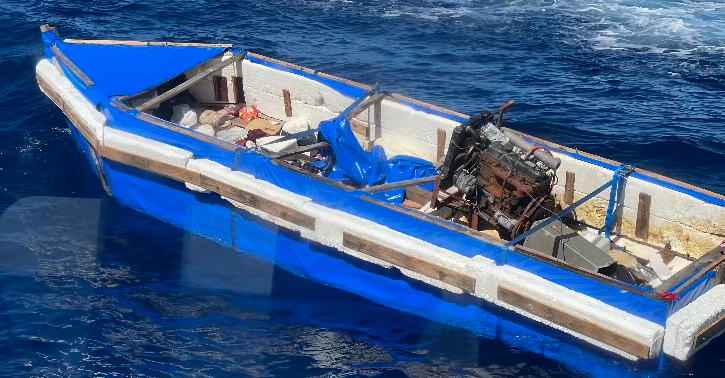
“We searched for missing people in the water and did not find anyone, so we suspended the search," Petty Officer Nicole Groll told Islander News in Key Biscayne.
"It's the dangers of crossing the sea, like finding a needle in a haystack," Groll said. "The problem is, you never know who we are not finding. And we don't know who (or how many) was on there. That's the tragedy of what's happening with illegal migration."
At least two of the water containers were almost full, indicating that the passengers could have been rescued by passersby or smugglers.
"We try to investigate cases like that but the hardest thing is finding the smugglers," said Adam Hoffner, spokesman for Customs and Border Protection (CBP). "We investigate cases of human trafficking because they are exploiting these people," he added.
Source: Univision News. Read the original article
Cubans are disappearing as they sail to America, leaving a painful void
PALMA SOLA, Cuba, Oct 12 (Reuters) - Every day, Cuban mother Mayra Ruiz wakes up wondering if today might be the day she hears from her only son, Maiquel Gonzalez.
Gonzalez disappeared without a trace in December 2022 alongside 28 friends and family who fled for Florida aboard a homemade boat. They were frantic to escape the crisis-racked Caribbean island, amid signs the United States was about to tighten immigration rules.
For nearly two years, Ruiz has lived in limbo, yearning for any sign of her son.
"We haven't had good news, but we haven't had bad news either," said the 61-year-old, who lives in the city of Santa Clara, in central Cuba. "My mother's heart tells me he's alive... but not hearing from him is torture."
Gonzalez, who would now be 28, was typical of Cuba's youth, his mother said: He loved music and dance, and drove a motorcycle taxi. But he also dreamt of a car, and a better home for his mother and father.
He knew he could never afford the nearly $5,000 price tag to fly to Nicaragua and then journey north to the U.S. border - the preferred migration route of many Cubans. So when the opportunity to take a homemade boat across the Straits of Florida presented itself - for less than $200 - he jumped at it.
The price was right. The distance, little more than 90 miles, far shorter. But the risk was incalculable.
The Straits, which bridge the gap between Cuba and the U.S. state of Florida, are plagued by strong currents, treacherous weather and shark-infested waters - considered among the five most dangerous migrant crossings globally, the U.N. says.
Reuters spoke with more than 40 friends and family of those lost on that boat. The conversations shed light on the complex calculus made by would-be migrants before undertaking the life-or-death journey. They also highlight how some families are left permanently scarred by their disappearance.
The U.N.'s Missing Migrants Project says 626 have died along the route since 2014, but cases like this one - never investigated by regional governments nor registered by the U.N. - suggest the numbers who disappear at sea may far exceed official counts.

Some family and neighbors of those lost told Reuters that preparations were already underway for a new exodus as Kamala Harris and Donald Trump debate immigration policy ahead of the Nov. 5 election, sowing fear among prospective migrants that the U.S. may again tighten its entry requirements.
The U.N. project has already recorded a nearly 20% surge in dead or missing migrants along traditional Caribbean migratory routes through Sept. 13.
The U.N. project classifies the missing boat of 29 as an "invisible" shipwreck, in which a vessel is reported missing, those aboard disappear, and neither authorities, the media, nor relatives can say for sure what became of them.
It's a phenomenon echoed in other refugee hotspots worldwide such as the Mediterranean and off the West African coast.
Reuters provided the names, birthdates, and the precise location and date of departure of the missing boat to migration authorities in the United States, in Cuba and in the nearby Bahamas. Neither U.S. or Bahamian authorities had any information on their whereabouts, nor had any government conducted a thorough investigation into the boat's disappearance.
Local authorities around the small farm town of Palma Sola, where the boat disappeared, conducted a search a week after the boat's disappearance but found nothing.
"It wasn't just one person, it was massive," said Ruiz, in tears during an interview at a farmhouse just a mile or so from where her son disappeared. "It's cruel, but the governments don't give us answers."
BAD LUCK
U.N. experts say 2022 was an especially bad year for migrants in the Caribbean region - the most lethal on record.
Word was spreading in Cuba of a pending U.S. crackdown on illegal migration by land and sea as the Biden administration prepared to implement its parole policy in 2023.
That new policy allowed Cubans, as well as those from Nicaragua, Haiti and Venezuela - to enter the U.S. legally provided they met certain requirements. But it came together with stronger enforcement, including across the Florida Straits, which prompted a rush to leave Cuba before the crackdown began.
Trump, who has touted anti-immigration policies as a key part of his campaign platform, has said he would eliminate the Biden parole program. The initiative has allowed hundreds of thousands of migrants with U.S. sponsors to enter the country legally.
The U.N. declined to comment on the U.S. elections or immigration policy. Edwin Viales, a regional monitor for the U.N.'s Missing Migrants project, told Reuters that migrant deaths are often the result of "restrictive policies that force people to migrate irregularly."
By the time the doomed raft was preparing to depart in late 2022, food, medicine and fuel shortages were worsening following a deep recession triggered by the global pandemic as well as more aggressive U.S. sanctions under Trump that had made life miserable for many in Cuba. Desperation had set in.
"The clock was ticking," said Kastia Rodriguez, a 36-year old who lost both a brother and a sister on the missing boat. "If they didn't go, they would be turned back."
Taking off from remote and poverty-stricken Palma Sola, the home of many of those who vanished, provided the shortest route from the Cuban coast to the nearby Florida Keys, and the cheapest.
The group's homemade boat, or "balsa," seemed like a winner, said Carlos Raul Reyes, an experienced local fisherman whose nephew was among the crew. He said it measured nearly 30 feet (9 meters) in length, built from solid wood planks with 16 flotation tanks - repurposed gas cans - to each side and a bus engine for power.

But bad luck struck early, he said. The crew, which set out under the cover of darkness, was forced to return for a forgotten bottle of engine oil, costing them a day - and their cherished clear-weather window.
A storm was brewing. The wind veered from a more favorable south to north, frothing up waves of 10 feet or more, sheets of driving rain and ushering in an unusually bitter chill.
"If they hadn`t turned around, they would have made it for sure," said Reyes, who searched for their bodies later but found only some familiar clothes and some spilled rice where the crew had camped before departing. "The conditions got very bad."
On December 26, 2022, one of their crew called home by cell phone, assuring family back home they were ok.
That was the last anyone would hear from them.
DEAD ENDS
Anxiety turned to panic about a week after the boat's initial departure, family members recall.
On January 6, 2023, less than two weeks after the boat left, the family alerted the police in the nearby town of Marti. A search by local authorities and local fishermen turned up nothing, family members said.
Officials with Cuba's foreign ministry advised Kastia Rodriguez, whose brother and sister were among the missing, to watch for migrants returned to Havana on charter flights from the Bahamas, where many had been detained.
Her siblings never materialized.
The months to come saw reports of mysterious phone calls from the U.S. as well as a sighting - later recanted - of one of the young men from the boat near Fort Lauderdale.
Many friends and family cling to the belief the migrants were detained in the United States, or in the Bahamas.
But some now concede, reluctantly, that their loved ones may have drowned.
"The weather was bad, and the ocean is a traitor. Maybe they were shipwrecked, but where is the evidence?," said Luis del Sol Vasquez, 69, whose only son vanished with the boat.
Back home, in Palma Sola, the boat's disappearance left some children in the town without a mother or a father, devastating the close-knit community.
Marbelia Estrada, 56, lost two children, an adult son and daughter, on the boat. Both had children of their own. Her daughter left two children without a parent after her husband took another rustic boat to the United States to earn money to support the family. Both children are now under the care of Sosa, their grandmother. All are traumatized, she said.
"We had to take them to a psychologist," Estrada told Reuters. "The 5-year old often asks, when is Papa coming home? He sometimes doesn't eat; he gets very sad."
The U.S. Coast Guard, which patrols the Straits of Florida and returns illegal migrants attempting to cross illegally to their home countries, told Reuters "there is not a case that matches this migrant voyage", after reviewing a list of the boat's crew.
Neither U.S. Customs and Border Patrol (CBP) nor U.S. Customs and Immigration Enforcement (ICE) had any record of the case.
The Bahamas' top immigration official, William Pratt, told Reuters in an email that "none of the names you provided appear in our Detainee Management System."
"HORROR SHOW"
Upwards of one million Cubans have left the island since 2020, roughly a tenth of the population, in an exodus demographers say has few parallels outside of war.
There are few signs of it slowing, especially as a fresh U.S. move to restrict illegal immigration further may be looming no matter who wins the November elections.
Cuba's government - which has long blamed U.S. sanctions for tanking its economy and stoking migration - is taking note.
"The issue of migration has become, like never before in the last 25 years, a key point of the current U.S. electoral campaign," according to a report in state-run media outlet Granma in late September.
"This is sounding alarms for potential migrants who will try to reach U.S. territory more quickly before the elections... and on many occasions they resort to irregular migratory movements."
Alain Molina, from the nearby coastal town of Coralillo, who survived his own shipwreck on a U.S.-bound balsa in December 2022, said he believed another such wave of emigration was imminent, as the island's communist-run economy flounders.
"People are already making preparations. Everyone is talking about it," Molina said. He had already been offered a seat on a boat, he said, though he'd declined.
"It's going to kick off again at any moment."
Reporting by Dave Sherwood, additional reporting by Alexandre Meneghini and Alien Fernandez in Palma Sola, Jasper Ward and Ted Hesson in Washington and Mica Rosenberg in New York; Editing by Christian Plumb and Daniel Flynn
Dave Sherwood is the bureau chief in Havana for Reuters. He covers politics, economics, and the environment in communist-run Cuba, and often contributes to coverage elsewhere in the Caribbean. He was previously based in Santiago, Chile, covering mining, the salmon industry and general news across South America. He first reported for Reuters from New England and Atlantic Canada and has also worked extensively throughout Central America.
Source: Reuters. Read the original article